Flat Burrs vs. Conical Burrs: Which Is Best for Your Espresso?

Author:
Nat Hill
Posted:
13/07/2026
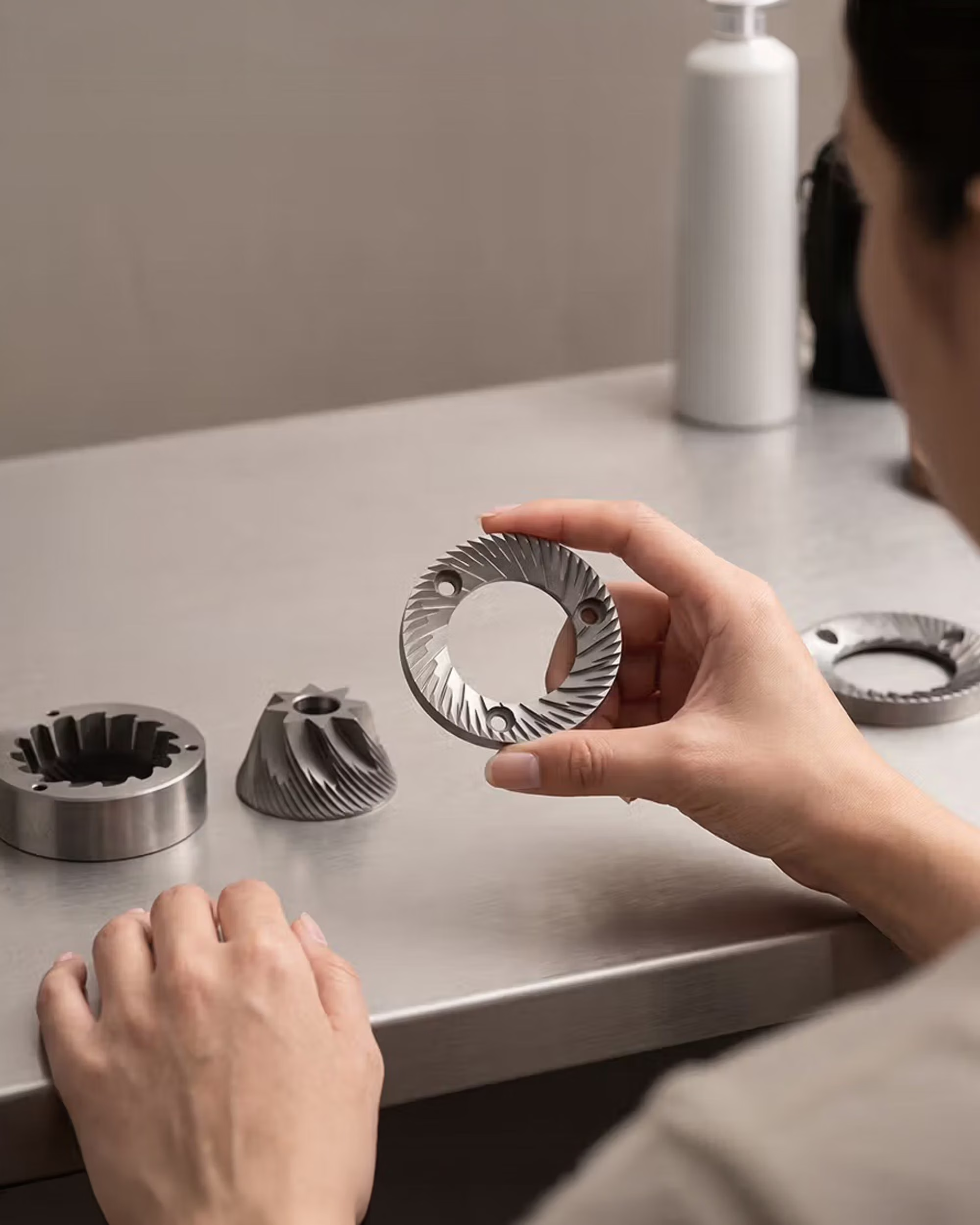
Flat or conical burrs? It’s one of the most common questions we get asked when choosing an espresso grinder – and also one of the easiest to oversimplify. Both burr designs can produce brilliant espresso. The difference comes down to how they grind the coffee, the particle distribution they create, and how that interacts with the coffee, recipe and extraction you’re after.
At Macap, it’s never really a question of whether flat or conical burrs are inherently better. Both are used across the range, with each burr system chosen as part of the wider engineering of the grinder. Burr geometry is just one part of that picture, alongside burr diameter, motor power, rotational speed, alignment, thermal behaviour and mechanical stability.
So what actually separates flat and conical burrs – and how can those differences show up in the cup?
What Is the Difference Between Flat and Conical Burrs?
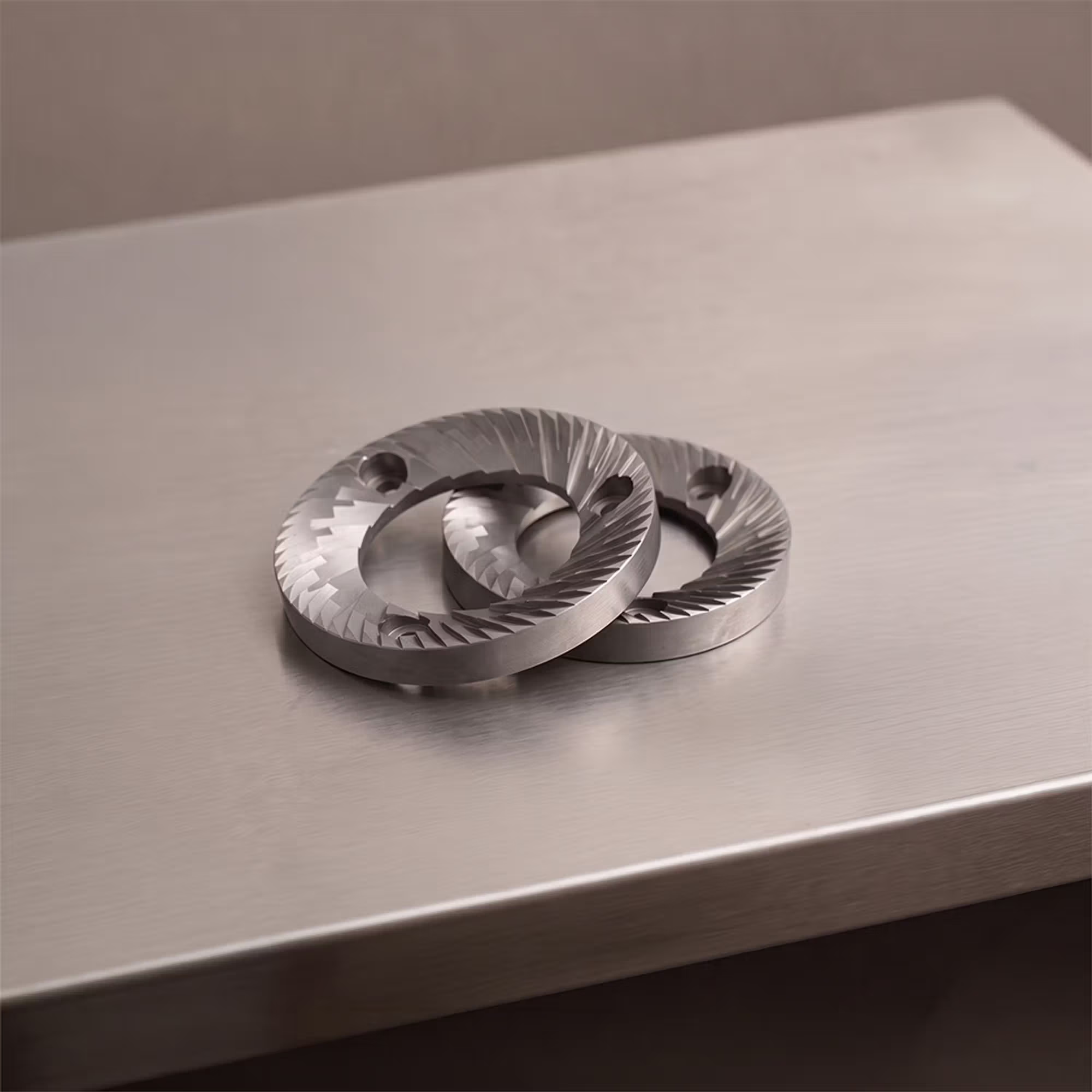
Both systems grind coffee between two precisely engineered cutting surfaces, just in different configurations. Flat burrs use two parallel, ring-shaped burrs positioned horizontally against each other. Coffee passes between them as it’s gradually reduced down to the size you need.
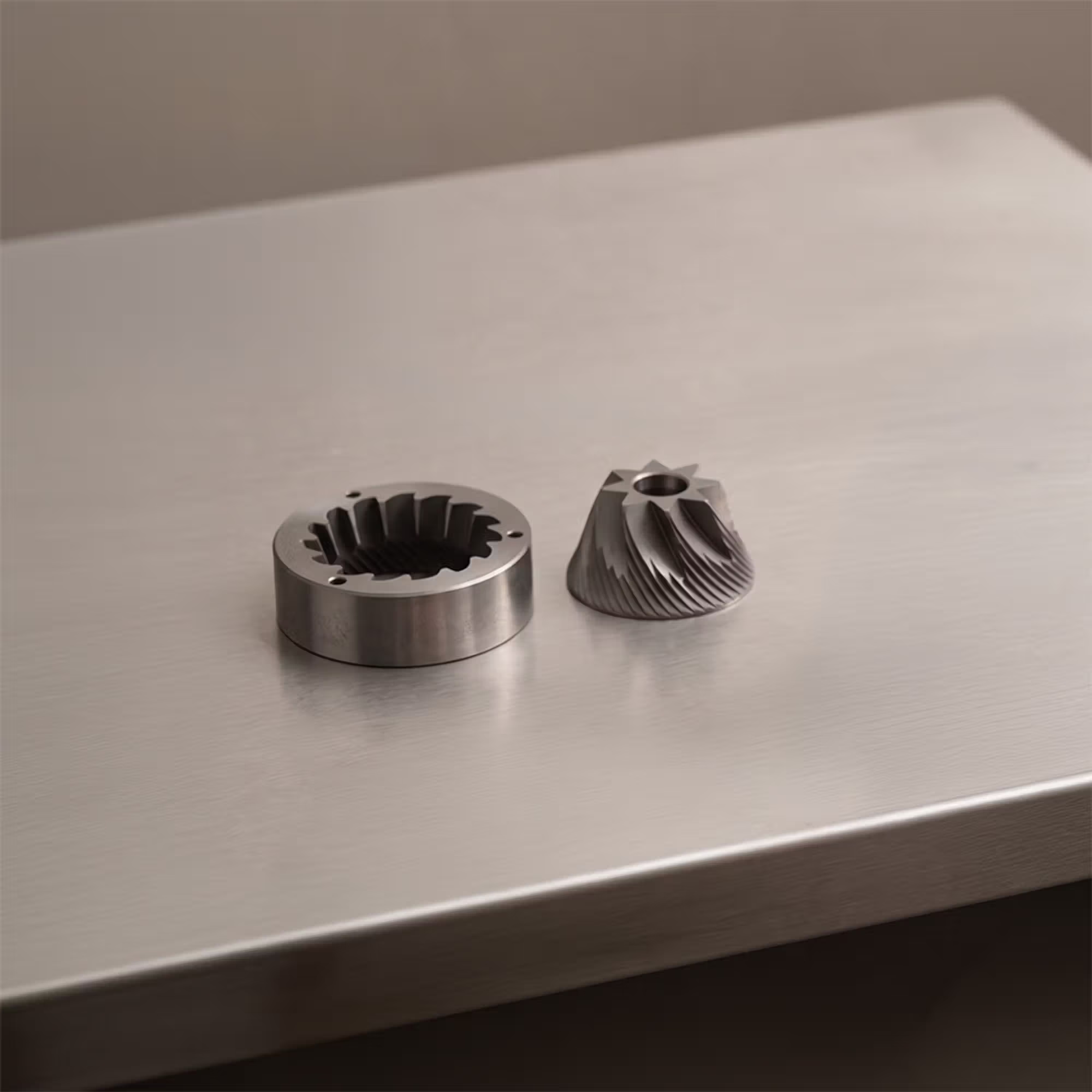
Conical burrs use an inner cone-shaped burr rotating within an outer ring. Coffee moves through the narrowing gap between the two surfaces as it grinds. From a user’s point of view, both are doing the same job.
From an engineering point of view though, the different geometries affect how coffee moves through the grinding chamber, and the particle distribution that comes out the other end. And that particle distribution has a direct impact on extraction.
Why Particle Distribution Matters for Espresso
Ground coffee is never made up of particles that are all exactly the same size. Every grinder produces a mix of larger particles, smaller particles and very fine material known as fines. These particles don’t extract at the same rate.
Smaller particles generally extract more readily, while larger ones extract more slowly. The balance between them affects flow rate, extraction behaviour and, ultimately, the flavour and texture of the espresso.
The goal isn’t necessarily to make every particle identical. It’s to create a controlled, repeatable particle distribution that supports the extraction profile you’re aiming for. This is where burr design starts to influence what you actually taste in the cup.
The Case for Flat Burrs
Flat burrs are widely used in professional espresso grinding, and feature across a lot of the Macap range. Depending on the cutting geometry, well-engineered flat burrs can produce a controlled particle distribution that’s often linked to strong flavour separation and clarity.
In practical terms, that can mean it’s easier to pick out individual characteristics in the coffee – acidity, sweetness, aromatics and origin character. For speciality coffee, where those differences often matter, that level of definition can be really valuable.
Flat burrs can also work brilliantly in high-volume environments. Larger flat burrs give you a substantial cutting surface, so coffee can be processed quickly when paired with the right motor and grinder architecture.
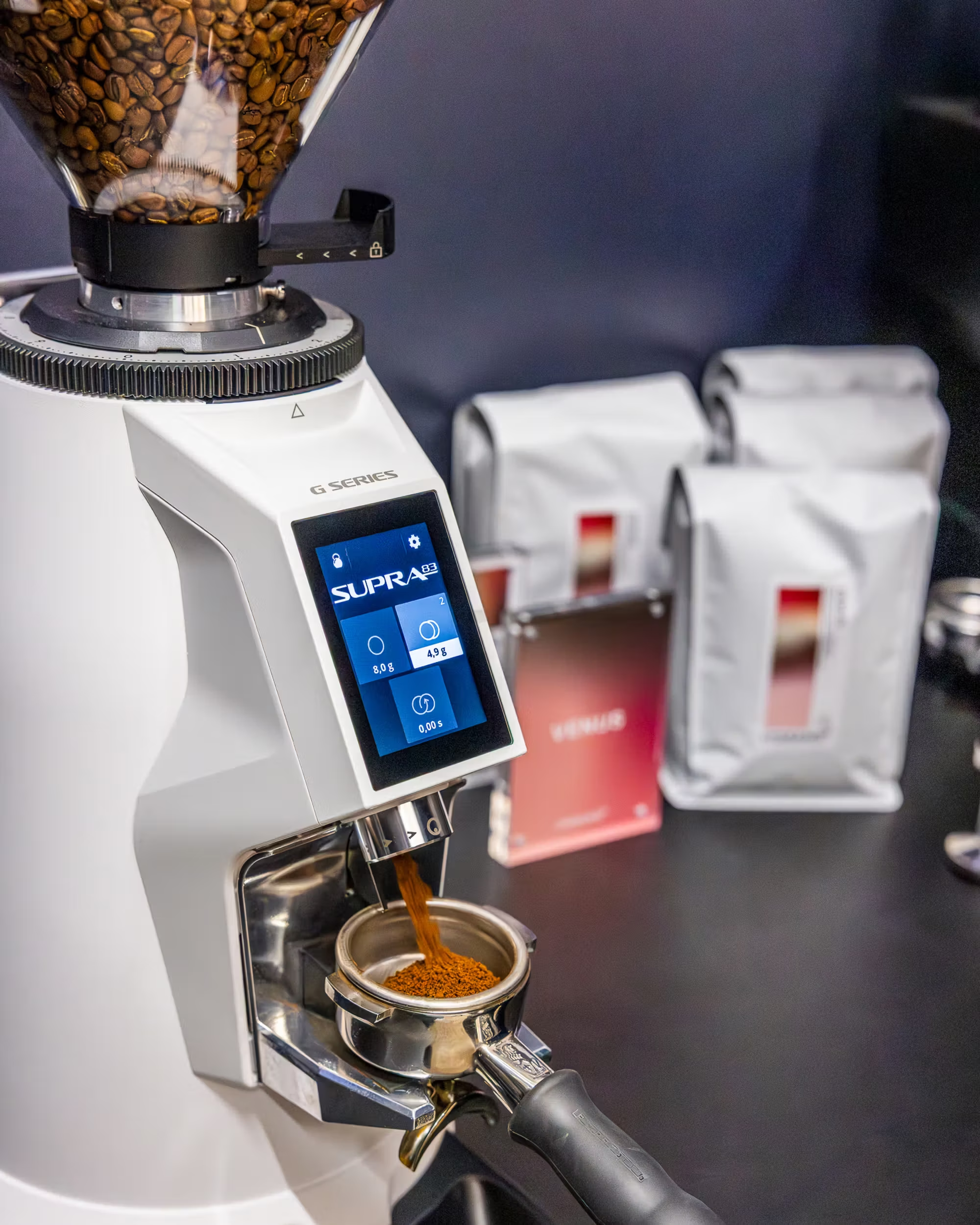
This is one of the reasons Macap uses large flat burr systems in professional grinders like the Supra range.
The Case for Conical Burrs
Conical burrs approach the same task differently. Because the coffee moves progressively through an inner and outer burr, the resulting particle distribution can differ quite a bit from what a flat burr set produces.
Conical grinders are often associated with espresso that has more pronounced body, texture and a more integrated flavour profile. For some coffees and recipes, that’s exactly the result you’re after.
Macap also uses conical burr technology in professional grinders like the M7K, which shows that conical geometry isn’t just an alternative for smaller or lower-performance machines. It can be a deliberate engineering choice.
As with flat burrs though, not all conical burrs behave the same way. The specific cutting geometry, motor, speed and grinder architecture all play a part in the final result.
Macap Tip: Look Beyond the Specification Sheet
Burr diameter and geometry are useful when you’re comparing grinders, but they never tell the whole story. Think about how the burrs perform as part of the complete grinder – including particle distribution, adjustment, retention, speed, thermal behaviour and performance under sustained load. Flat and conical burrs aren’t competing levels of technology. They’re different engineering approaches. The best choice is whichever one delivers the extraction, workflow and sensory result you need, consistently. And where you can, taste the result for yourself – that’s where it matters most.
Flat vs. Conical: Think in Terms of Outcomes
Rather than choosing burrs based on geometry alone, it’s more useful to think about the outcome you’re after.
A well-designed flat burr system may lend itself to:
- High flavour clarity and separation
- Controlled particle distribution
- High grinding productivity
- Precise adjustment for speciality espresso
A well-designed conical burr system may lend itself to:
- Pronounced body and texture
- A fuller, more integrated flavour profile
- A different balance of particle sizes
- Grinding characteristics suited to particular coffees and recipes
These are tendencies rather than guarantees.
Coffee variety, processing method, roast development, burr geometry, RPM, alignment, temperature and extraction parameters can all play into the final result.
The Grinder Is a Complete System
Focusing only on burr shape misses a lot of what actually determines how a grinder performs.
A professional grinder also needs to control:
- Burr alignment and mechanical stability
- Motor power and behaviour under load
- Rotational speed
- Heat generated during sustained grinding
- Retention within the grinding chamber
- Movement of coffee through the burrs
- Grind adjustment accuracy
- Delivery of ground coffee into the portafilter
All of these interact with each other.
It’s why Macap approaches grinder development as a complete mechanical system, rather than treating the burr set as an isolated spec.
Particularly in high-volume environments, the challenge isn’t just producing the right particle distribution once.
The grinder needs to reproduce that performance dose after dose, even as demand ramps up.
Flat Burrs and High-Volume Espresso
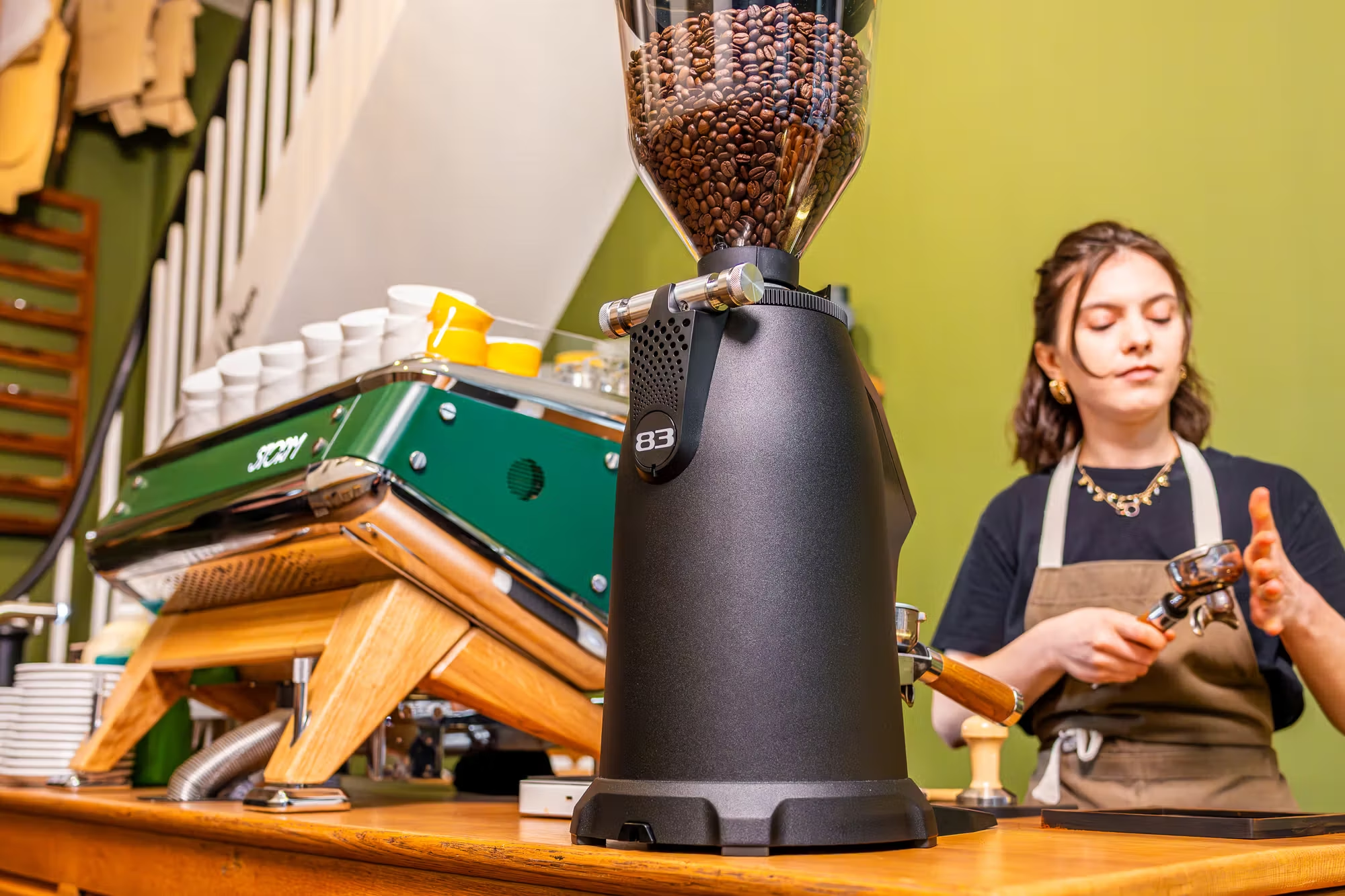
Large flat burrs are particularly well suited to grinders where speed and sustained productivity are priorities. The Macap Supra range is a good example. The Supra 83 combines 83mm flat burrs with a 750W motor and grinding speeds of around 5.5–6g/s, giving high-volume operators extra capacity during peak periods.
The goal isn’t simply to grind faster. It’s to increase throughput while still keeping control over particle distribution and consistency. For a professional bar, that balance matters a lot more than burr size on its own.
So, Are Flat or Conical Burrs Better?
Neither burr geometry is universally better. If you favour espresso with pronounced clarity, flavour separation and definition, a well-engineered flat burr grinder can be particularly appealing. If you lean towards more texture, body and a more integrated flavour profile, certain conical burr designs can suit that style really well.
But these are broad tendencies, not fixed rules.
Coffee variety, processing method, roast profile, burr geometry, grinder design and extraction recipe all affect the result. So the most useful question isn’t really:
“Are flat burrs better than conical burrs?”
It’s:
“What type of grinding system will give me the coffee I want, consistently, at the volume my business needs?”
That’s ultimately the question professional grinder engineering needs to answer.
FAQs
Are flat burrs better for espresso?
Flat burrs can be particularly well suited to espresso, especially where clarity, flavour separation and consistency are priorities. That said, burr geometry and the overall grinder design matter more than the flat-burr label alone.
Do flat burrs produce more flavour clarity?
Well-designed flat burr sets can produce a controlled particle distribution that’s often linked to greater flavour clarity and separation. The exact result depends on the specific burr geometry, coffee and extraction recipe.
Do conical burrs make better espresso?
Conical burr grinders can produce excellent espresso and may suit operators after greater body, texture and a more integrated cup profile. They’re not inherently better or worse than flat burrs.
What burrs does the Macap Supra use?
The Supra range uses flat burrs, with 68mm and 83mm configurations available. The Supra 68 balances speed and commercial performance, while the Supra 83 is built for extremely high-volume environments.
Which is better for my café: flat or conical burrs?
That depends on your coffee style, the sensory profile you’re after and your operational needs. Rather than choosing by burr shape alone, it’s worth thinking about flavour goals, peak volume, grinder speed and how the complete grinder performs in service.