Macap Model Comparison: Supra vs. Studio vs. Leo

Author:
Nat Hill
Posted:
17/08/2026
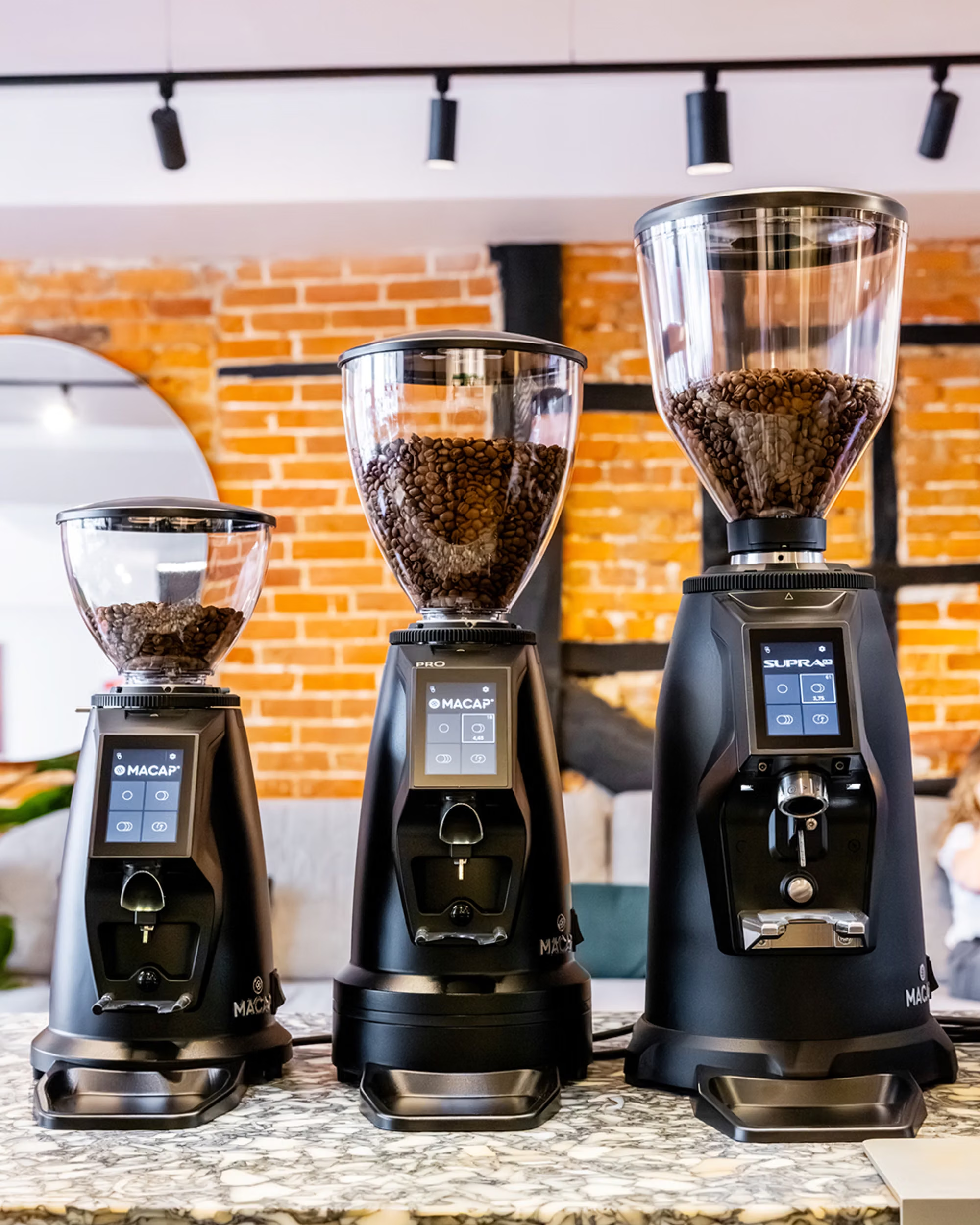
Most people don't start by asking which Macap range they need. They start with a problem.
A bar that's outgrowing its grinder during the morning rush. A second site that needs to taste like the first one. A café adding decaf without giving up counter space. Or a customer who's just bought a decent espresso machine for home and realised the grinder is now the weak link.
Macap builds across all of those situations, which is why the range is broader than most people expect. Three families cover the majority of it: Supra, the Studio grinders, and Leo.
They're not three price tiers of the same machine. They're built around genuinely different demands. Here's how I'd think about which one fits.
The Three Ranges at a Glance
Supra – the high-performance commercial platform. Built for high-volume bars where throughput and consistency both have to hold up through a long service. 68mm or 83mm flat burrs, with commercial grind-by-weight available in the G Series.
Studio – the working commercial range. Broad, adaptable and specified around how a particular bar actually runs, whether that means on-demand dosing, a traditional doser, a built-in tamper or a shop grinder for retail bags.
Leo – café-level espresso grinding at home. Compact, micrometric and quiet, for people who care about what's in the cup but don't have a bar behind them.

Supra: When the Grinder Has to Keep Up
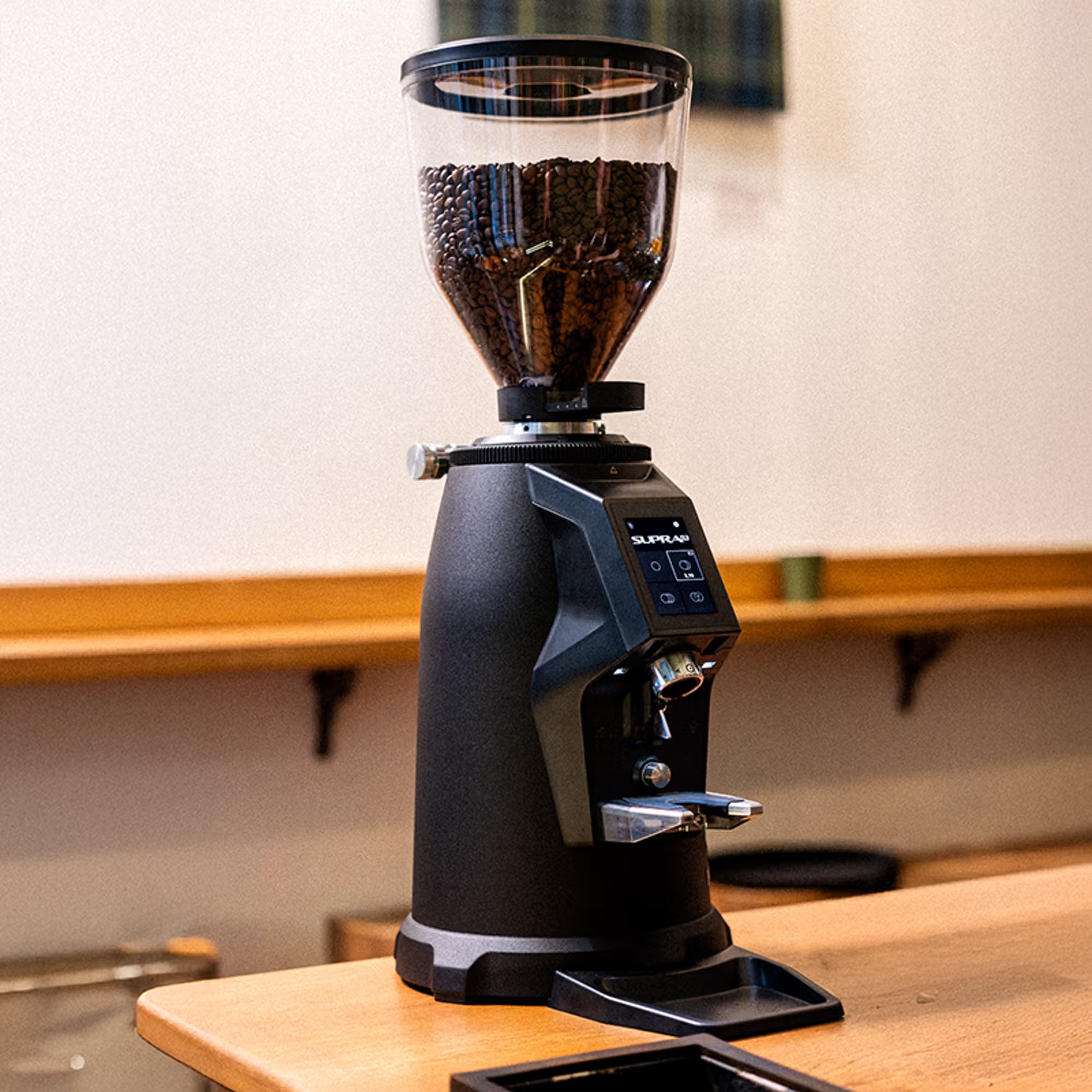
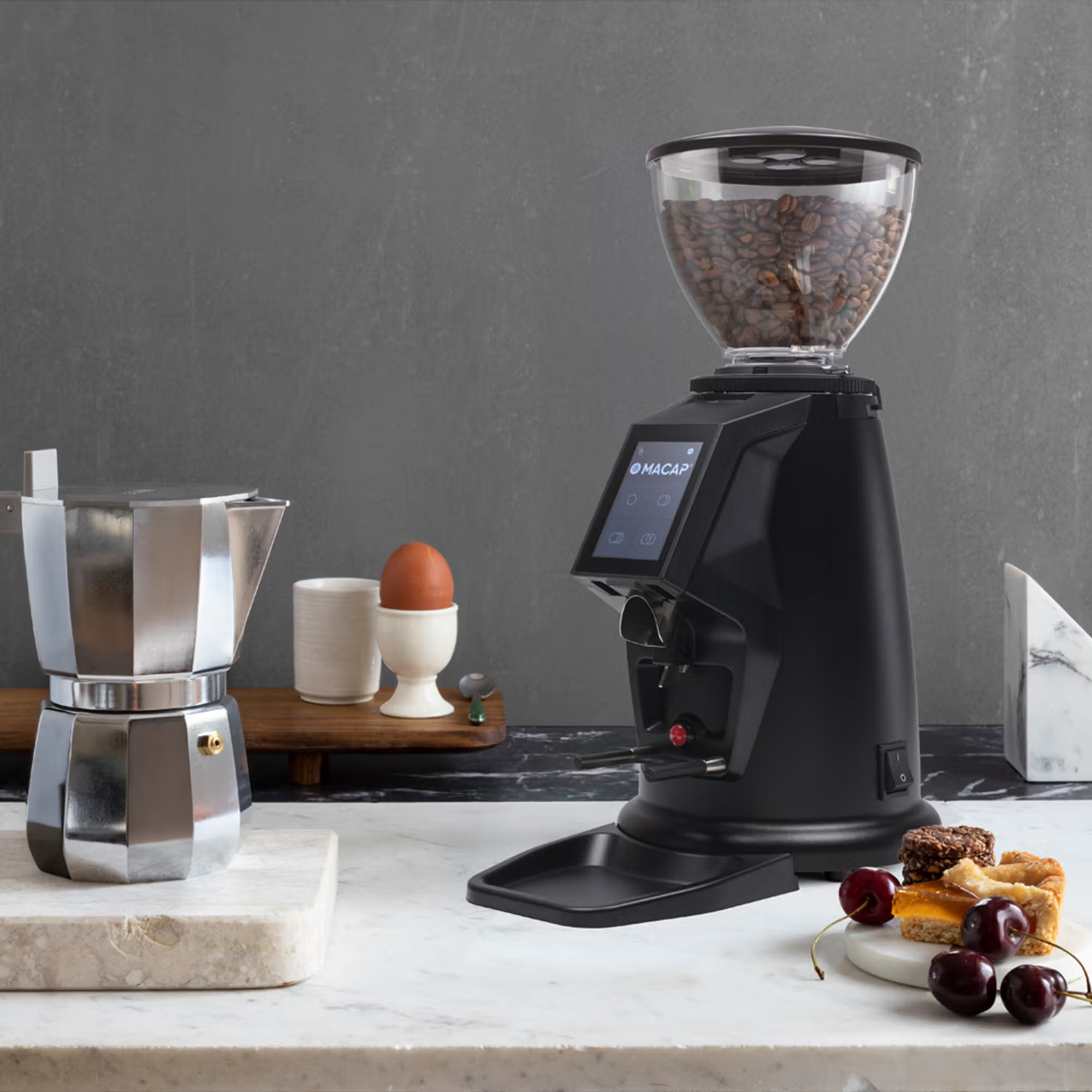
Supra is Macap's answer to a specific commercial problem: sites where the grinder is one of the things deciding how fast service moves.
The Supra 68 pairs 68mm flat burrs with a 550W motor and grinds at roughly 3.8–4.5g per second. The Supra 83 steps up to 83mm burrs and a 750W motor, at around 5.5–6g per second.
That difference sounds small on paper. Across a few hundred drinks it isn't.
But raw speed isn't really the point of Supra, and I'd be careful about specifying one on grams-per-second alone. What matters is that the grinder holds its accuracy and grind quality while it's working at that rate – on the two hundredth shot of the morning, not just the first.
That's why Supra is built the way it is. Integrated ventilation and an anti-clumping system keep behaviour predictable under sustained load. The Coffee Targeting System (CTS) lets you adjust the spout to deliver ground coffee exactly where it needs to be, straight into the centre of the portafilter, which keeps the workflow cleaner and cuts down waste around the grinder. The Fast Opening System (FOS) moves you between micro and macro adjustments with a click, and opens up the grinding chamber for routine cleaning.
Dosing Type Selection (DTS) is worth a mention too, because it's a small thing that solves a real staffing problem. You can set the grinder to Standard, Push & Grind or Barista mode depending on how much you want the barista to think about, which is useful when experience varies across a team or between sites.
The Supra G Series
Both burr sizes are available as G Series, which adds Macap's commercial grind-by-weight technology.
Instant Tare Technology tares the portafilter in around 0.1 seconds, so dosing starts immediately rather than waiting for a scale to settle. Smart Dose Recognition can be programmed to recognise up to five different portafilters and adjusts to the right dose the moment one is inserted – single, double, bottomless or custom.
The reason I rate this as more than a headline feature is that plenty of grind-by-weight systems work well in theory and then slow a bar down in practice. The G Series is built to survive real service.
If dose consistency across a big or high-turnover team is one of your recurring headaches, that's the version to look at.
Choose Supra If…
- Your grinder becomes a bottleneck during peak service
- You're running multiple groups flat out for long stretches
- You need the same result across several sites, with staff of varying experience
- Dose accuracy and waste are commercial problems, not just quality ones
- You want headroom to grow without re-specifying in two years
Think high-volume speciality cafés, transport hubs, drive-throughs, large hospitality venues and multi-site operators standardising a fleet.
Studio: The Range That Bends to Your Bar
Studio is where most cafés actually live, and it's the part of the Macap range that's hardest to summarise in one line – because its strength is variation rather than a single spec.
These grinders are more accessible than Supra, but I'd resist reading that as a step down in intent. They're commercial machines, designed for bars that are genuinely busy. What changes is that you're specifying around your workflow instead of around maximum throughput.
Instant, on-demand grinding. The MI models are the modern core of Studio. MI40 gives you 65mm flat burrs, a 1.2kg hopper, four programmable doses, a 3.5" touchscreen and an adjustable cooling fan, with the MI40 Pro adding more power and productivity again. MI20 drops to 58mm burrs and a more compact footprint. All of them use a grind adjustment ring with a zero setting, which makes burr changes and dial-in far less of a guessing game.
Traditional doser models. M7, MX and M42 keep the doser chamber, with Timer and Automatic variants if you want dosing handled for you. There's still a lot of demand for this – some bars work faster with a doser, and some just prefer it.
Low-speed grinding. M7K and MXK run at 350rpm rather than 1400, which is a different approach entirely: less heat and less mechanical stress put into the coffee. M7K is also the clearest example that Macap hasn't picked a side on burr geometry, since it uses a conical burr system rather than flat.
Built-in tampers. Several Classic models can be specified with a telescopic tamper or a built-in dynamometric tamper. On a tight bar with no room for a separate tamping station, that's not a gimmick – it's counter space you get back.
Shop grinders. The MC models are for grinding retail coffee to order rather than pulling espresso. If you sell beans, roast, or run a deli counter, that's a different job needing a different machine.
Choose Studio If…
- You need real commercial capability without Supra's peak-volume headroom
- Your workflow has specific requirements: a doser, a tamper, bulk retail grinding
- You're pairing a second grinder alongside a main one for decaf, a single origin or a guest coffee
- Counter space, footprint or hopper size is a genuine constraint
- You want technology that a new starter can pick up in a shift
The pairing point is worth expanding on, because it comes up constantly. Plenty of sites run a Supra on their main coffee and an MI40 alongside it. Supra handles the volume; the Studio grinder covers whatever else the coffee programme needs. How you split it is up to you – there's no single correct configuration.
Macap Tip: Specify for the Job, Not the Price Bracket
The most common specifying mistake I see isn't buying the wrong quality of grinder. It's buying the wrong shape of grinder. An underpowered machine on a busy bar will frustrate everyone every single day. But an ultra-high-volume grinder in a site that does defined bursts of trade is capacity you've paid for and won't use – and it might take up counter space you'd rather have given to a second grinder. Start with your busiest hour, your coffee programme and your physical space. Then choose the range.
Leo: Café-Level Grinding at Home
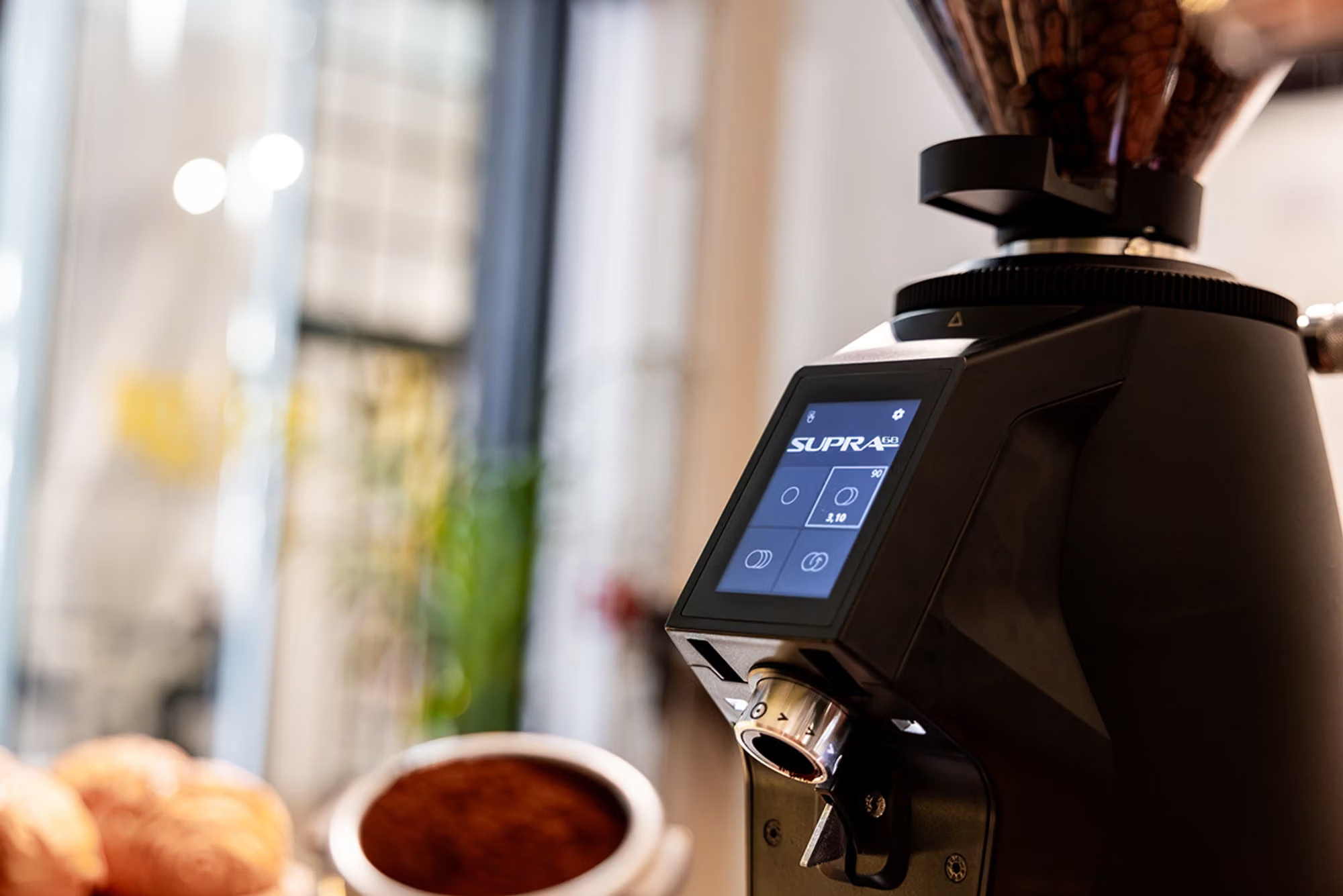
Leo is Macap's home range, and it's the newest expression of where the brand is heading stylistically.
The thinking behind it is simple. Domestic espresso equipment has got dramatically better, and grinders are usually what's holding those setups back. Leo brings professional grinding principles into a machine that suits a kitchen.
All four versions use 55mm flat burrs, a 300g hopper and micrometric adjustment with a double-faced adjustment disc – so you're dialling in with real precision rather than working through fixed steps. Silent System technology keeps the noise down, which matters far more at home than it does on a bar. The footprint is 131mm wide.
The versions differ in power and interface. Leo 55 Touch and Leo 55 both run 390W at 1.8–2.2g per second, with the Touch adding a 2.4" touchscreen and the standard model using a simpler interface. Leo 55 Essential and Leo 55 Easy run 310W at 1.3–1.7g per second, with Essential keeping the new interface and Easy stripping it back to the essentials.
Same grinding platform throughout. You're choosing how much interface you want and how quickly you want it to grind.
For anyone with lighter or occasional needs, the M2 Line sits alongside Leo with 50mm burrs and a smaller footprint again.
Choose Leo If…
- You're making espresso at home and want the grinder to stop being the limiting factor
- You want precise adjustment without professional training
- Kitchen space and noise both matter
- You'd rather waste less coffee getting dialled in
- You want equipment you can maintain yourself
So, Which Macap Grinder Is Right for You?
Strip it back and the decision usually comes down to one question: what is the grinder being asked to survive?
If it's sustained high-volume service where speed and precision both have to hold, that's Supra – and the G Series if dose consistency across a team is the recurring problem.
If it's a busy bar with specific workflow requirements and a realistic budget, that's Studio – and the variation within it is the reason it works, not a complication.
If it's espresso at home, made properly, that's Leo.
None of these ranges is a compromised version of the one above it. They're engineered for different demands, which is what makes it possible to put genuinely capable grinding within reach of the site, the bar or the kitchen that needs it.
If you're weighing up two options and can't separate them, talk to your local Macap dealer about your busiest hour and your coffee programme. That conversation gets you to the right answer faster than a spec sheet will.