Macap Supra G Series: A Complete Guide to Commercial Grind by Weight

Author:
Nat Hill
Posted:
21/08/2026
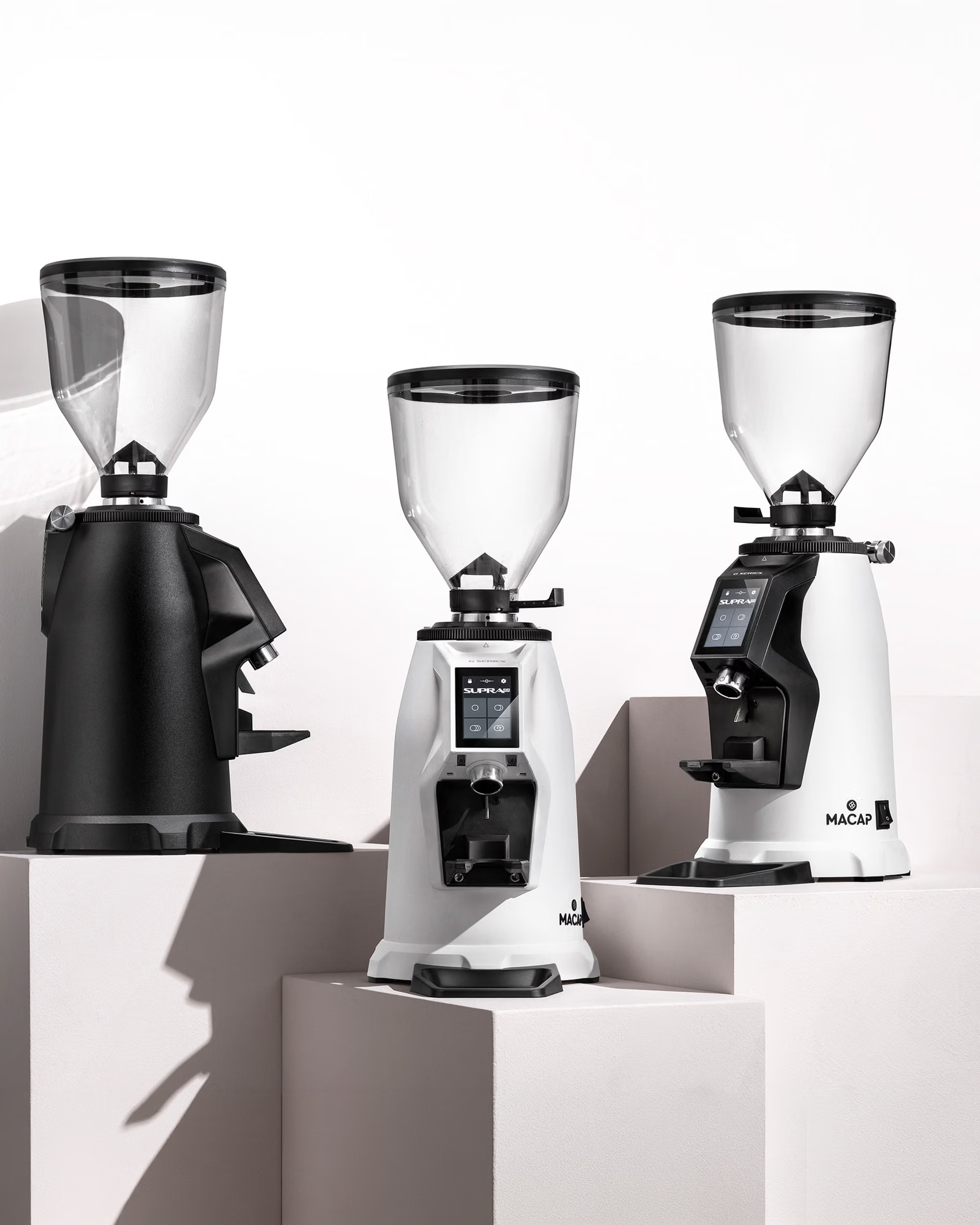
Grind by weight has a reputation problem in commercial coffee.
The theory has never been in doubt. Weighing the dose as it lands in the portafilter is more accurate than timing the motor, because coffee doesn't grind at a perfectly constant rate. Beans age. Humidity shifts. Burrs wear. A grind-by-time dose that was 18g on Monday might be 17.4g by Friday.
The problem has always been what that accuracy costs you in service.
Most grind-by-weight systems ask the barista to wait. Wait for the scale to zero. Wait for it to stabilise. Wait for the reading to settle before anything actually grinds. On a quiet bar that's fine. On a bar doing 400 drinks between eight and eleven, those seconds turn into a queue.
So a lot of operators have made a straightforward calculation: accuracy is great, but not at the cost of service speed.
The Supra G Series removes this trade-off entirely – which is why the company describes it as the first truly commercial-ready grind-by-weight grinder.
This guide covers what's actually in it, how it differs from a standard Supra, and who genuinely benefits from specifying one.
What Is the Supra G Series?
The G Series isn't a separate grinder. It's the grind-by-weight version of the Supra platform, available on both burr configurations. That distinction matters, because it means you're not choosing between weight-based dosing and Supra's core performance. You get the same grinder underneath either way.
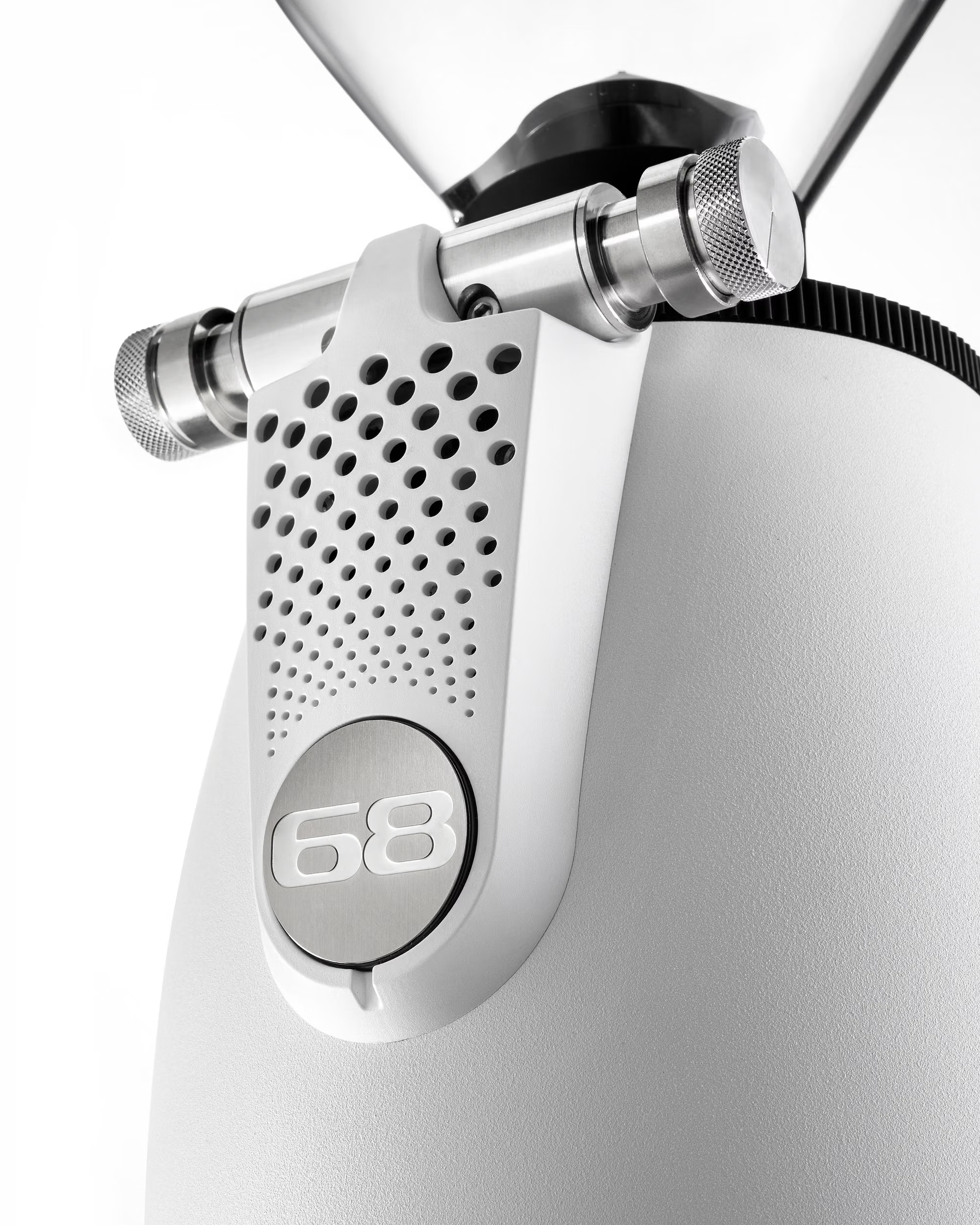
Supra 68 G Series — 68mm flat burrs, 550W, roughly 3.8–4.5g per second
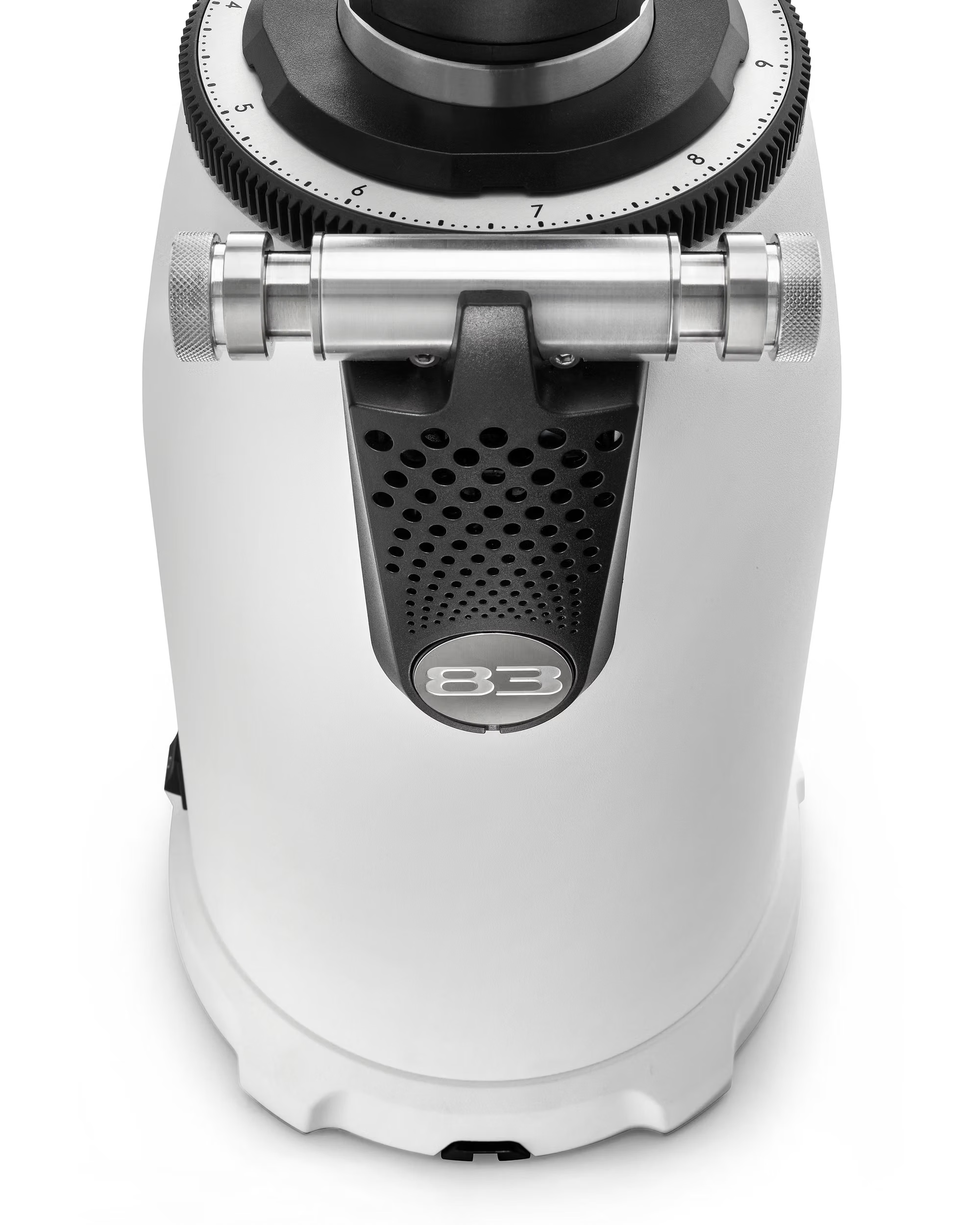
Supra 83 G Series — 83mm flat burrs, 750W, roughly 5.5–6g per second
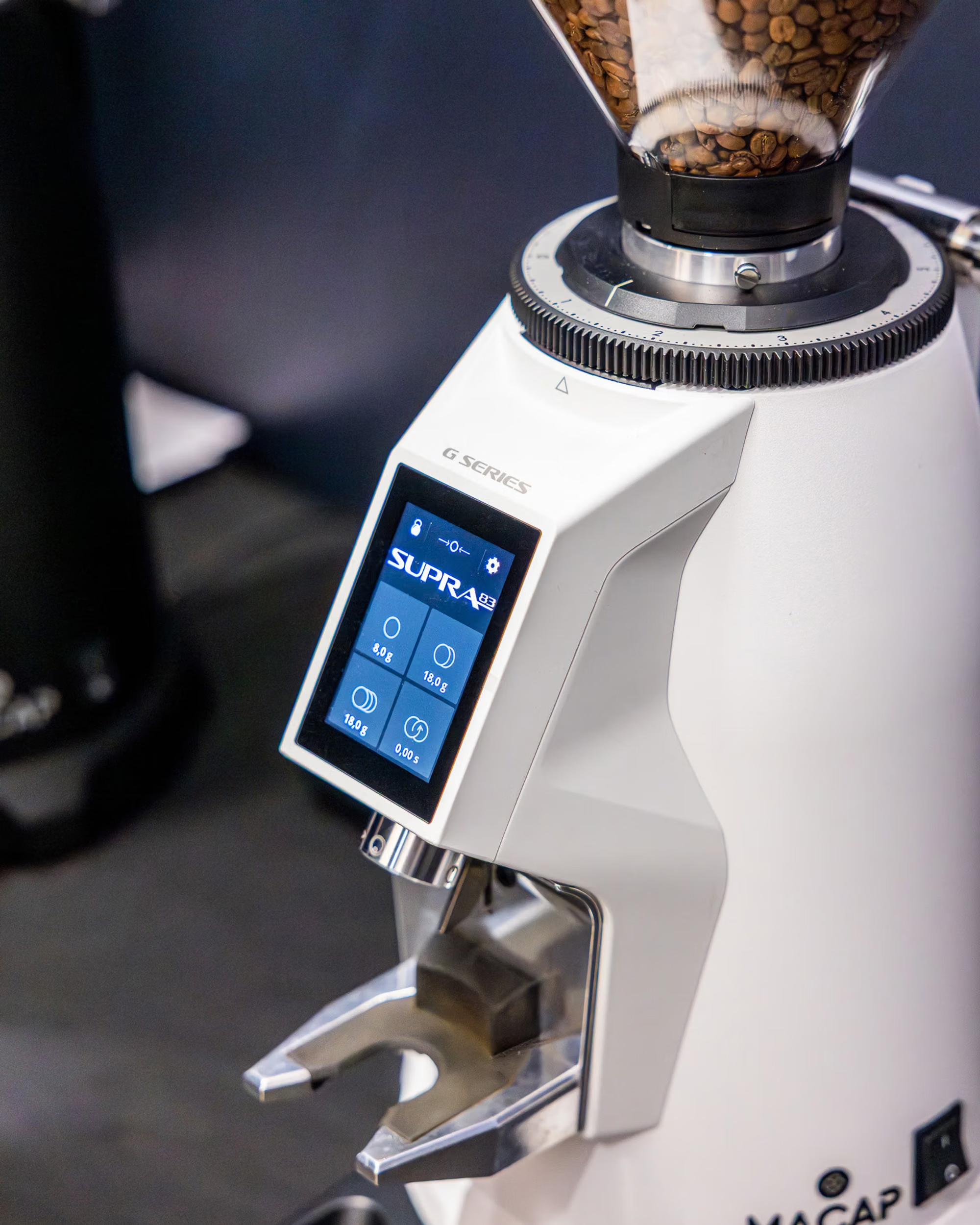
Same 1.5kg hopper, same 244 × 354 × 638mm footprint, same 3.5" touchscreen. The G models add around 0.8kg in weight, which is the weighing system itself.
Everything else about how you'd specify a Supra stays the same. You pick your burr size based on throughput, then decide whether the workflow benefits from weight-based dosing.
Why Grind by Weight Matters Commercially
It's worth being clear about what you're actually buying, because "more accurate dosing" undersells it.
Dose variance is a quality problem you can't see A 0.5g swing on an 18g dose changes your brew ratio, your flow rate and your extraction. The barista often can't tell by eye, and by the time it shows up in the cup the drink has already gone out.
It's also a cost problem Overdosing by half a gram on every drink, across thousands of drinks a week, is coffee you've bought and given away. On tight margins that adds up faster than most people expect.
And it's a training problem Weighing every dose manually is achievable when your team is experienced and settled. It's much harder when you're onboarding new starters, running across several sites, or working through a period of high turnover. Accuracy that depends on the person holding the portafilter is accuracy you can't guarantee.
Weight-based dosing moves that burden off the barista and onto the grinder. That's the real argument for it.
Instant Tare Technology
This is the feature that addresses the delay problem directly.
Instant Tare Technology tares the portafilter in around 0.1 seconds. There's no waiting for the scale to settle before dosing begins – you present the portafilter and the grinder starts working.
I'd put it like this: the technology isn't impressive because it weighs accurately. Every grind-by-weight system weighs accurately. It's impressive because it weighs accurately without asking the barista to change their rhythm.
That's the difference between a feature that gets used and one that gets switched off during the morning rush. It also removes external scales from the workflow, which is one less thing on a crowded bar and one less thing to knock, clean around or replace.
Smart Dose Recognition
The second G Series feature deals with a different problem: menus that have got considerably more complicated.
Smart Dose Recognition can be programmed to recognise up to five different portafilters. The grinder identifies which one has been inserted and delivers the correct dose for it automatically – single, double, bottomless or a custom basket.
No buttons. No mode switching. No barista remembering that the bottomless is on programme three.
For sites running multiple recipes – a house espresso, a decaf, a single origin, a different dose for milk drinks – this is where a lot of the day-to-day error creeps in. Not because staff don't know the recipes, but because during service they're doing six things at once.
Eleonora Bardoni, Macap's Marketing Director, framed it well when we covered this in Global Coffee Report: these features "remove steps that would otherwise depend on a barista's experience. The machine adapts, rather than asking the person behind it to compensate."
That's a good test for any workflow technology, actually. Does it absorb complexity, or add it?
Supra vs. Supra G Series: What Actually Changes
Stays the same: Burr size and geometry, motor power, productivity, hopper capacity, footprint, touchscreen, CTS, FOS, anti-clumping, ventilation, DTS and the underlying mechanics.
Changes: Dosing moves from grind by time to grind by weight, you gain Instant Tare Technology and Smart Dose Recognition, and the grinder gains roughly 0.8kg.
So the decision isn't really about grinder performance. It's about whether your operation benefits from the grinder controlling dose accuracy rather than the person using it.
Who Actually Needs the G Series?
The Supra G Series suits any hospitality business who prioritise both speed and consistency, along with quality in the cup, with a particular benefit if:
- You run multiple sites and need them to produce the same drink
- Your team has high turnover or a wide spread of experience
- You're running several recipes or formats across different portafilters
- Waste and coffee cost are figures you actively watch
- Training time is a real constraint and you want fewer things to teach
- You're already weighing doses manually and it's slowing service down
Macap Tip: Grind by Weight Doesn't Replace Dialling In
One thing worth saying plainly, because it's a common misconception. Weight-based dosing controls your dose. It doesn't control your grind setting, your extraction time or your yield. You still need to dial in properly, still need to taste, and still need to adjust as coffee ages or conditions change. What the G Series gives you is one fewer variable moving underneath you while you do it – which actually makes dialling in easier, because you're not chasing a dose and a grind setting at the same time. Think of it as removing noise from the process, not removing the process.
Options Worth Knowing About
Both G Series models can be specified with titanium flat burrs, which extend burr life considerably in high-throughput environments – relevant if you're grinding serious volume and want to stretch the service interval.
There's also a 110V option for markets that need it, and the grinder is available in textured white or textured black, with a Total White treatment available on the white finish.
If you're comparing burr options specifically, it's worth talking to your dealer about expected throughput, because that's what determines whether the upgrade pays for itself.
The Bigger Picture
What I find interesting about the G Series isn't any individual feature. It's the design logic behind it.
Grind by weight isn't new. What's new is grind by weight that survives contact with a genuinely busy bar – where accuracy doesn't come at the cost of speed, and where the sophisticated part of the technology is invisible to the person using it.
That's a reasonable definition of useful engineering: the barista doesn't have to think about it, and the operator can rely on it.
FAQs
What is the difference between the Supra and the Supra G Series?
The Supra G Series adds commercial grind-by-weight dosing to the Supra platform, along with Instant Tare Technology and Smart Dose Recognition. Burr size, motor power, productivity, hopper capacity, footprint and features such as CTS and FOS are the same across both.
Is the Supra G Series available in both burr sizes?
Yes. Grind by weight is available on both the Supra 68 and the Supra 83, so you can choose burr size based on throughput and dosing method based on workflow.
How fast is Instant Tare Technology?
Instant Tare Technology tares the portafilter in around 0.1 seconds, so dosing begins immediately rather than waiting for a scale to stabilise. That's what allows weight-based dosing to work at commercial speed.
How many portafilters can Smart Dose Recognition store?
Up to five. The grinder recognises which portafilter has been inserted and delivers the correct dose for it automatically, whether that's a single, double, bottomless or custom basket.
Does grind by weight slow down service?
It can with traditional systems, which typically require the scale to settle before grinding starts. The Supra G Series is designed specifically to avoid that delay through instant taring and automatic dose recognition.
Do I still need to dial in a grind-by-weight grinder?
Yes. Weight-based dosing controls dose accuracy, not grind size, extraction time or yield. You still need to dial in and taste – but with one fewer variable shifting while you do it.
Does the Supra G Series need external scales?
No. Weighing is integrated into the grinder, which removes external scales from the bar and takes a step out of the barista's workflow.